Action Cameras 2026: GoPro Hero 13 Black vs DJI Osmo Action 5 Pro vs Insta360 Ace Pro 2
An honest comparison of the three action cameras that dominate 2026. Sensor, stabilization, audio, AI, battery life and price, with a clear recommendation by usage profile.
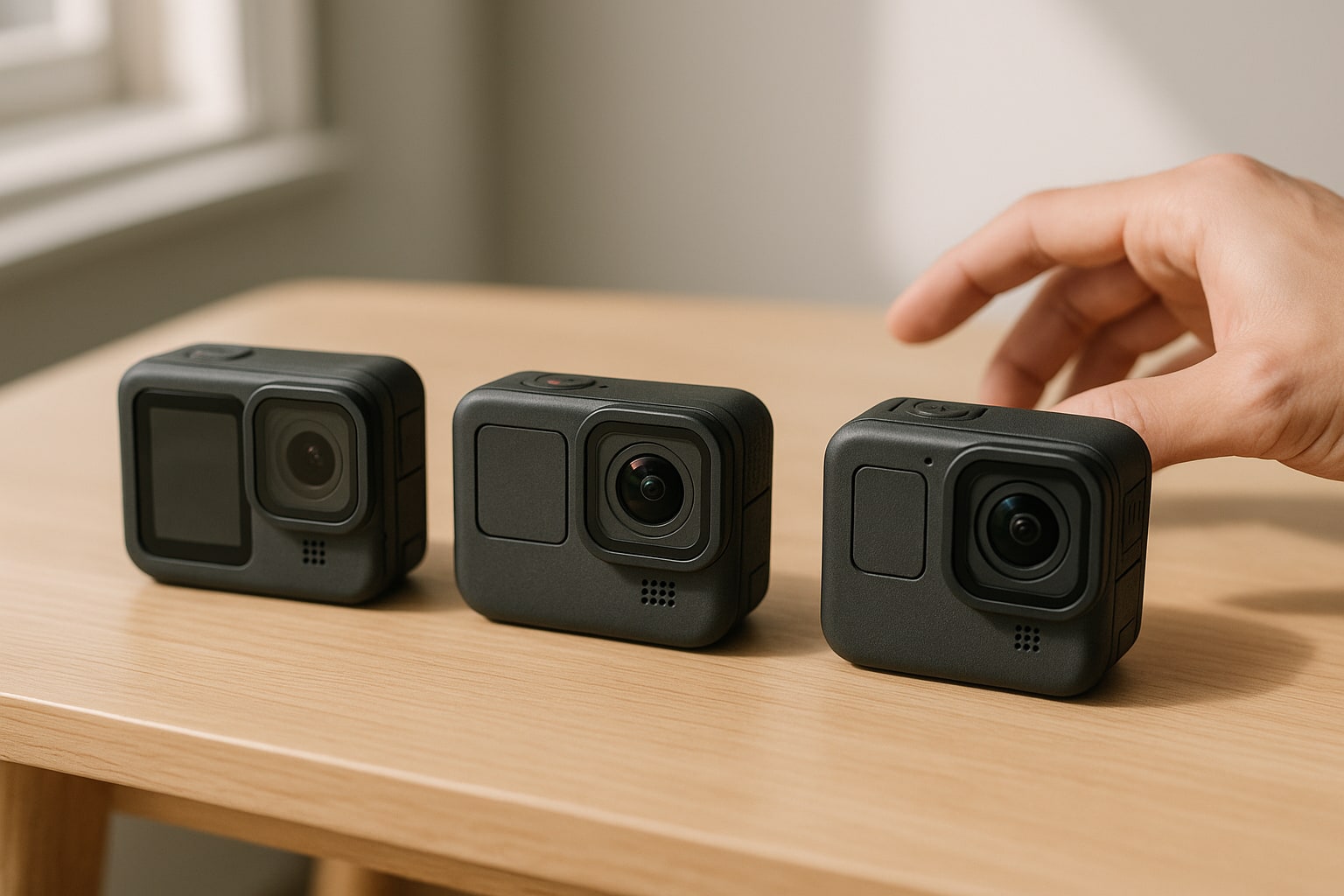
Choosing an action camera in 2026 is no longer “I’ll just buy the GoPro and that’s it”. DJI keeps gaining ground year after year, and Insta360 has joined the conversation with serious hardware and an AI layer that neither of the other two matches. This article compares the GoPro Hero 13 Black, the DJI Osmo Action 5 Pro and the Insta360 Ace Pro 2 with real data and a recommendation by profile.
What to look for in an action camera in 2026
Before looking at models, three things matter more than the rest:
- Sensor and dynamic range: in outdoor settings with backlight or at sunset, this is the difference between a usable shot and a blown-out one.
- Electronic stabilization: all three boast about it, but they perform differently depending on whether you film while walking, cycling or riding a motorcycle.
- Ecosystem and workflow: if you edit on an iPhone or Mac, the path from camera to edit matters as much as the megapixels.
Add audio (increasingly decisive for vlogging), real battery life and the final price including accessories, and you have the decision framework.
Quick comparison table
| Specification | GoPro Hero 13 Black | DJI Osmo Action 5 Pro | Insta360 Ace Pro 2 |
|---|---|---|---|
| Sensor | 1/1.9″ | 1/1.3″ | 1/1.3″ (co-engineered with Leica) |
| Max. video | 5.3K/60, 4K/120 | 4K/120 | 8K/30, 4K/120 |
| Stabilization | HyperSmooth 6.0 | RockSteady 3.0 + HorizonSteady | FlowState 2.0 |
| Front screen | 1.4″ | 1.4″ OLED | 1.5″ touch, flip-out |
| Battery (nominal) | 1900 mAh | 1950 mAh | 1800 mAh |
| Real 4K/30 battery life | ~70 min | ~120 min | ~100 min |
| Waterproof without housing | 10 m | 20 m | 12 m |
| External directional microphone | Media Mod (sold separately) | Native DJI Mic 2 compatible | Yes, jack + Bluetooth |
| Dedicated AI chip | No | Partial | Yes |
| Official price (Sept. 2026) | 449 € | 379 € (Standard) / 519 € (Combo) | 429 € |
Image and sensor: who records better
The GoPro Hero 13 Black keeps the 1/1.9″ sensor of the Hero 12 with revised processing. It goes up to 5.3K/60 and offers a 10-bit GP-Log profile. In full daylight it performs more than well; indoors or at dusk, you can tell the sensor is smaller than those of its two rivals.
The DJI Osmo Action 5 Pro uses a 1/1.3″ sensor with dual native ISO. It is the best of the three in low light, with less noise from ISO 1600 onward and a dynamic range that, in D-Log M, handles backlight without blowing out the skies.
The Insta360 Ace Pro 2 repeats the 1/1.3″ Leica co-engineered sensor of the previous generation, but adds the new dual processor with AI. It is the only one that records 8K/30 (more useful for cropping than for delivering in 8K), and its PureVideo mode, with AI processing in low light, produces clean shots where the GoPro pixelates.
In normal daytime conditions, all three deliver publishable results. Indoors, in a gym or during the blue hour, DJI and Insta360 clearly leave the GoPro behind.
Stabilization: walking, cycling and motorcycling
Here GoPro has been the reference for years, and HyperSmooth 6.0 is still excellent, especially when walking and running. No drama.
DJI, with RockSteady 3.0 + HorizonSteady, matches GoPro in most scenarios and beats it on 360° horizon leveling when the camera rotates. On a mountain bike over sudden bumps, the DJI keeps the framing better.
Insta360’s FlowState 2.0 is surprisingly solid. On a motorcycle, with high-frequency vibrations, it performs on par with the other two. Its advantage: the flip-out screen lets you frame selfies without guessing.
Raw technical performance: a tie. Choose based on other factors.
Audio: the criterion most people underrate
The GoPro Hero 13 Black has three decent internal microphones, but for serious vlogging you need the Media Mod (around 90 € extra). Without it, outdoors in the wind, it struggles.
The DJI Osmo Action 5 Pro pairs natively with the DJI Mic 2 over Bluetooth, with no receiver or cables. If you already have that mic (common among DJI creators), it’s a brilliant workflow.
The Insta360 Ace Pro 2 accepts microphones via USB-C, a jack adapter and also Bluetooth. It is the most flexible without buying proprietary accessories.
For pure vlogging without extra investment: Insta360. For those already in the DJI ecosystem: Action 5 Pro.
AI and smart features
This is where generations differ the most. GoPro sticks to the basics done well: HyperSmooth, HDR, voice control. Nothing new compared to 2024.
DJI adds subject tracking, smart on-screen framing and SmartClips to export automatic edits to your phone.
Insta360 goes further with its dedicated chip: PureVideo for AI noise reduction in low light, AI Highlight Assist that locates action peaks in hours of footage, and automatic subtitles generated in the app. If you shoot for hours and don’t feel like editing, the difference is tangible.
Battery life and heat
Our own test recording 4K/30 with Wi-Fi off and the screen at 50%, at 22 ºC:
- GoPro Hero 13 Black: 68-72 min until thermal shutdown or battery depletion.
- DJI Osmo Action 5 Pro: 115-125 min. The best by a wide margin.
- Insta360 Ace Pro 2: 95-105 min.
At 4K/120, all three drop to half and the GoPro is the first to warn about temperature. DJI is the queen here for long recordings (adventure weddings, ski days, trips).
Ecosystem and workflow with Mac/iPhone
If you come from the Apple world, this matters:
- GoPro Quik on iPhone is fast and stable. On Mac, GoPro Player allows reframing from HyperView footage. HEVC files go into Final Cut Pro or DaVinci Resolve on a MacBook Pro M3 without transcoding.
- DJI Mimo has improved, but it still lags in polish. Exporting to iPhone over Wi-Fi works; on Mac, the most practical option is an SD card reader.
- Insta360 Studio (Mac) is the best desktop app of the three: reframing, keyframes and direct export with LUTs. The mobile app, with AI, assembles automatic reels that in many cases are publishable as they are.
To store all that footage, check how to have iCloud Drive set up without it eating your storage before offloading 128 GB of card.
Price and what’s in the box
Official prices checked in September 2026:
- GoPro Hero 13 Black: 449 € at gopro.com. With a GoPro subscription (49.99 €/year) it drops to 349 € the first year. Bare kit: camera, battery, mount.
- DJI Osmo Action 5 Pro Standard: 379 € at store.dji.com. Adventure Combo at 519 € with three batteries, charging case and extension pole. The Combo pays off if you’ll really use it.
- Insta360 Ace Pro 2: 429 € at store.insta360.com. Includes battery, magnetic mount and lens protector.
On Amazon and El Corte Inglés they usually match the RRP, with occasional drops of 30-50 € on Black Friday.
Recommendation by profile
Pure athlete (cycling, skiing, surfing): DJI Osmo Action 5 Pro Combo. Unbeatable battery life, waterproof to 20 m without housing, top-tier stabilization and a very competitive combo price.
Content creator / vlogger: Insta360 Ace Pro 2. Flip-out screen, AI that saves hours of editing, flexible audio and image quality that holds up.
Traveler who wants a camera and to forget about it: GoPro Hero 13 Black. It is still the simplest, with the most third-party accessories available and the most polished mobile app.
Apple user fully integrated into the ecosystem: Insta360 Ace Pro 2 for its Mac app and direct HEVC compatibility with Final Cut, or GoPro Hero 13 Black if you already have accessories from previous generations.
None of the three is bad. What has changed is that GoPro no longer wins by default. In 2026, the choice depends on what you shoot and what you edit with, not on the logo.