Alexa, Google Home or HomeKit: which one to choose depending on your home
An honest comparison of the three major voice assistants for home automation: compatibility, privacy, price and the role Matter plays in 2026.
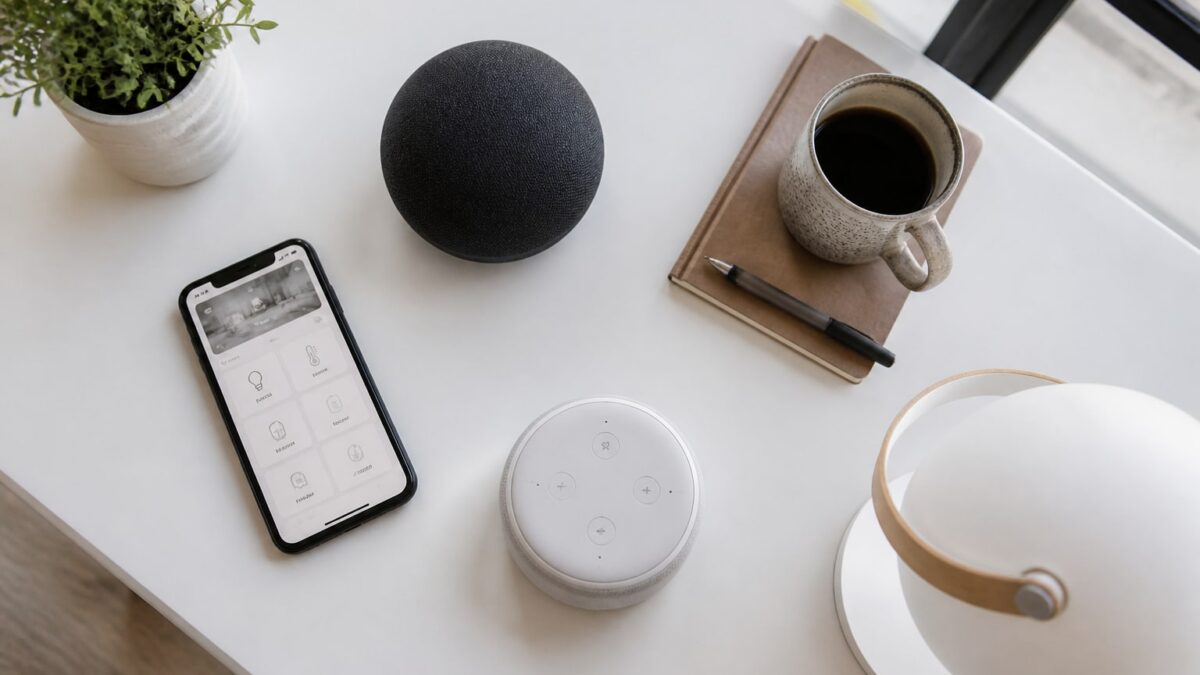
Choosing a voice assistant in 2026 is no longer just about “which one understands what I say best”. It’s about deciding where your data goes, which devices you’ll be able to add within three years and how much you’ll depend on a specific ecosystem. If you have an iPhone, the short answer is usually HomeKit. But not always, and here’s why.
Before we get down to it, a quick summary so you can get your bearings.
Quick comparison table
| Aspect | Apple HomeKit | Amazon Alexa | Google Home |
|---|---|---|---|
| Entry speaker | HomePod mini (109 €) | Echo Dot (approx. 60 €) | Nest Mini (approx. 55 €) |
| High-end speaker | HomePod 2 (349 €) | Echo Studio (approx. 230 €) | Nest Audio (approx. 100 €) |
| Compatible catalogue | Medium (growing with Matter) | Very broad | Broad |
| Privacy | End-to-end encryption | Processed in Amazon’s cloud | Processed in Google’s cloud |
| Control app | Home (iOS/macOS) | Alexa (iOS/Android) | Google Home (iOS/Android) |
| Hub required | HomePod / Apple TV / iPad | Compatible Echo (optional) | Nest Hub (optional) |
| Matter support | Yes, native | Yes | Yes |
Prices from the Apple Store Spain and indicative RRPs as of 26 November 2026. Alexa and Google Home vary considerably depending on Amazon and MediaMarkt offers.
What each ecosystem offers
HomeKit is Apple’s home automation system, integrated into iOS, iPadOS, macOS and watchOS. You manage it from the Home app, which comes preinstalled. To control devices when you’re not at home you need a hub: a HomePod, a HomePod mini, an Apple TV or a stationary iPad at home.
Alexa is Amazon’s assistant. It lives in Echo speakers and in thousands of third-party devices carrying the “Works with Alexa” logo. Its app works the same on iPhone as on Android.
Google Home (formerly Google Assistant for the home) is Google’s offering. Its strong points are the Nest speakers and, above all, understanding context: chained questions, general knowledge queries, integration with Gmail and Calendar.
Device compatibility
Here Alexa wins on volume. Almost any plug, bulb or white-label camera you buy on Amazon comes with Alexa compatibility. Google Home follows behind but covers everything relevant. HomeKit has historically been the most demanding: Apple certified each device, which raised prices and reduced the catalogue.
That has changed with Matter, the open standard that all three support. Today, a Matter plug works the same in HomeKit as in Alexa or Google Home. If you buy with Matter in mind, the catalogue gap between the three largely disappears.
Privacy: where your data goes
This is where Apple sets itself apart from the rest. HomeKit encrypts communication end to end between your devices and your iPhone. Apple does not process on its servers what your bulbs or sensors do. Siri processes requests on the HomePod itself when it can, and whatever is sent to servers is tied to a random identifier, not to your Apple ID.
Alexa and Google Home process commands in the cloud by default. You can delete history and turn off saving, but both have a business model different from Apple’s. If privacy is your priority, HomeKit wins without question.
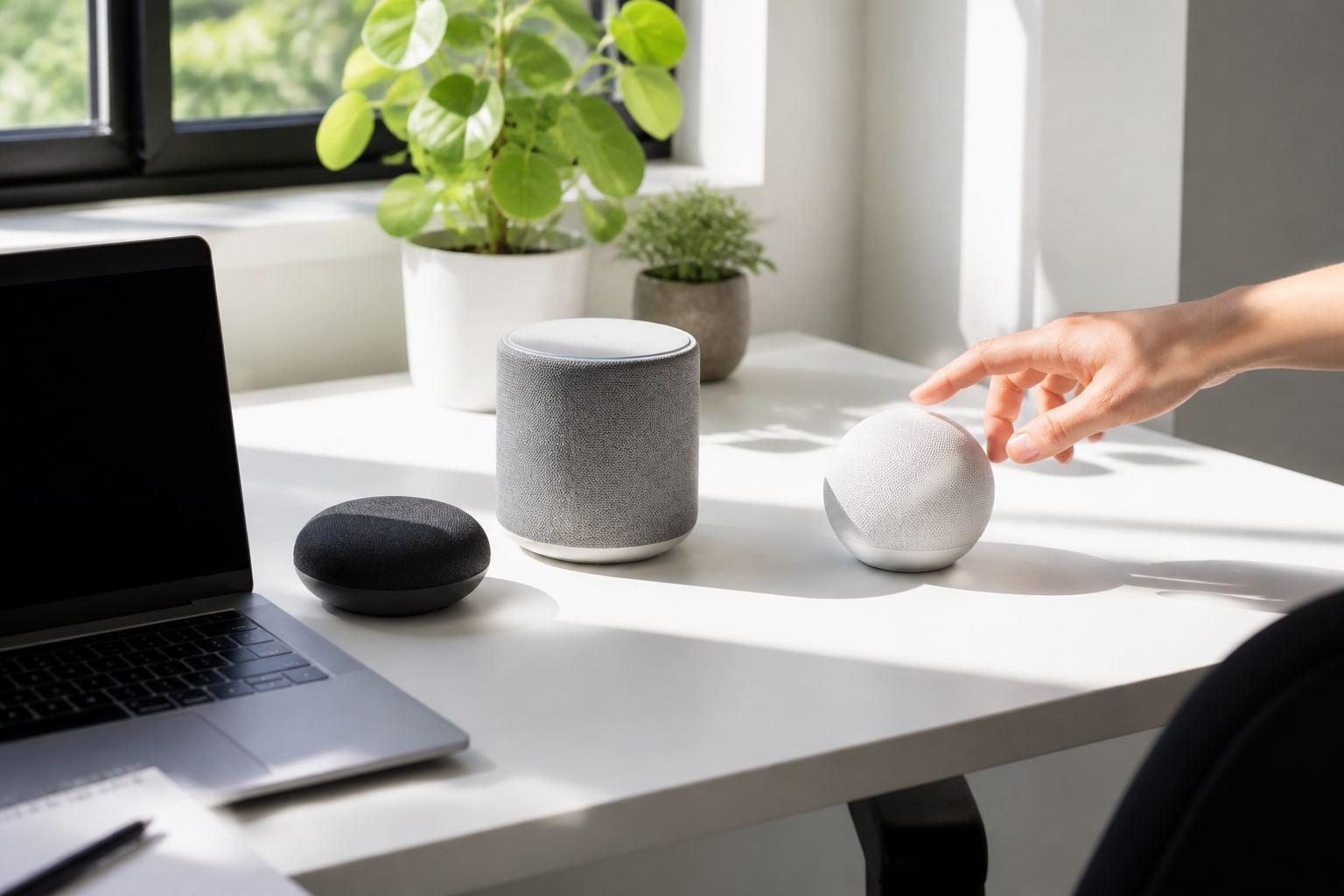
Voice assistant quality
Siri remains the most limited of the three for open-ended questions. For pure home automation (“turn on the living room”, “set it to 21 degrees”) all three work well. For more complex dialogue, Google Assistant has the edge. Alexa sits in the middle, with the appeal of third-party skills.
If you use the speaker mainly to control lights and play music, the difference is smaller than it seems. If you use it as a conversational assistant, go with Google.
Price and speakers
The HomePod mini costs 109 € at the Apple Store Spain. The HomePod 2 goes for 349 €. They are more expensive than the direct competition, but they sound better than an Echo Dot or a Nest Mini. If you’ve already decided to go with Apple, it’s worth taking a look at the comparison between HomePod 2, HomePod mini and Sonos Era 300 before deciding on a model.
Alexa is the cheapest option to start with: a 60 € Echo Dot and a couple of 15 € smart plugs give you a functional base for under 100 €. Google plays in a similar range.
Matter: why it matters in 2026
Matter is the reason this comparison is less decisive than it was two years ago. It is a standard backed by Apple, Google, Amazon and Samsung that lets a single device work across all three ecosystems at once. You buy a Matter thermostat, add it to HomeKit, and if tomorrow you switch to Alexa, you pair it again without throwing the device away.
Does this mean the ecosystem doesn’t matter? No. The app, the assistant and the quality of the integration still differ. But it reduces the fear of getting locked in.
Who each one is for
HomeKit if: you have an iPhone and/or Mac, you care about privacy, you want a clean app and you don’t mind paying a bit more for certified devices. Also if you already have a HomePod or Apple TV at home acting as a hub without you realising it.
Alexa if: you mix Android and iPhone at home, you want the broadest catalogue, you buy a lot on Amazon or you’re looking for the tightest budget.
Google Home if: you use Gmail, Calendar and Google Photos intensively, value a conversational assistant, or have a Chromecast or a Google TV.
My practical recommendation
If you have an iPhone, start with HomeKit using a HomePod mini and Matter devices. You’ll get privacy, native integration with the Home app and the door open to changing your mind later without losing your devices. If you also manage passwords and sensitive data from your phone, consider combining it with the Passwords app in iOS 18 and macOS Sequoia to keep the whole ecosystem coherent.
If your home is mixed (Android + iPhone + a TV with Google TV), Alexa or Google Home will give you fewer headaches than forcing HomeKit. Choose with your head, not your flag.
As an Amazon Associate, I earn from qualifying purchases.