Best mid-range phone in 2026: our recommendation
An honest guide to choosing the best mid-range phone in 2026, with a specifications comparison, real prices and recommendations by usage profile.
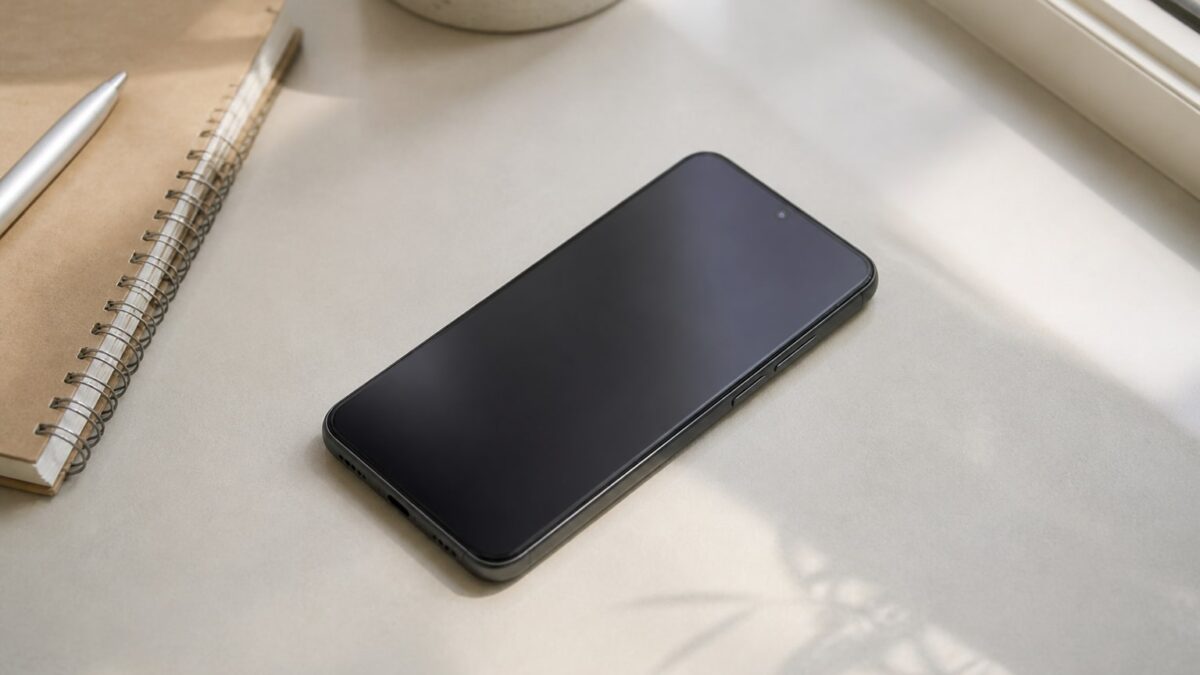
If you’re looking for a quick answer: in November 2026, the Google Pixel 9a (€499 at Google Store Spain) is the most balanced purchase in the mid-range if you don’t mind the operating system. If you want to stay in the Apple ecosystem, the iPhone 16e (€719 at Apple Store Spain) is the only official “mid-range” option, although it goes beyond the typical budget for the segment. None of them is perfect. Here’s why.
This article assumes you understand the difference between mid-range and high-end, and that you don’t want a copy-paste of the manufacturers’ spec sheets. Let’s get to what’s useful: what performs well, what fails and what’s worth it depending on what you use your phone for.
What we mean by mid-range in 2026
We’re talking about phones between €300 and €550, with a performance chip that’s decent for 2-3 years of use, a 90 or 120 Hz OLED screen, at least 8 GB of RAM and a main camera that holds up well in daylight. No outdated 5G or 60 Hz LCD panels. In 2026, that no longer flies at this price.
The iPhone 16e breaks the range from above, but it’s the only “entry-level Apple” currently on sale since the iPhone SE 3 was discontinued. I include it because many people search for “iPhone mid-range 2026” and it deserves real context about what you’re paying for.
Comparison table: the 2026 contenders
| Model | Chipset | RAM | Battery | Main camera | Display | RRP |
|---|---|---|---|---|---|---|
| Google Pixel 9a | Tensor G4 | 8 GB | 5,100 mAh | 48 MP | 6.3″ OLED 120 Hz | €499 |
| Samsung Galaxy A56 | Exynos 1580 | 8 GB | 5,000 mAh | 50 MP | 6.7″ OLED 120 Hz | €479 |
| Nothing Phone (3a) Pro | Snapdragon 7s Gen 3 | 12 GB | 5,000 mAh | 50 MP (with 3x telephoto) | 6.77″ OLED 120 Hz | €459 |
| Xiaomi Redmi Note 14 Pro+ | Snapdragon 7s Gen 3 | 8/12 GB | 5,110 mAh | 200 MP | 6.67″ OLED 120 Hz | €429 |
| iPhone 16e | A18 (4-core GPU) | 8 GB | ~4,000 mAh (high real-world use) | 48 MP | 6.1″ OLED 60 Hz | €719 |
Prices checked at apple.com/es, store.google.com, samsung.com/es and mi.com/es on 26 November 2026. On Amazon and PcComponentes you’ll find the Pixel 9a and Galaxy A56 between €40 and €80 cheaper depending on the week.
Our main recommendation: Google Pixel 9a
I’ve used it for three months as a secondary phone. The Tensor G4 doesn’t win any benchmarks against the high-end Snapdragon 8 Gen 3, but for WhatsApp, Instagram, Maps, email and photos it’s more than enough. The real difference with a standard Pixel 9 shows up in demanding games and 4K video editing, not in daily use.
What puts it ahead of the rest:
- Camera. Google’s processing is still the best in the mid-range. Night mode without inventing colours, portraits with clean edge cutouts, well-calibrated HDR.
- Updates. Google promises 7 years of security patches and Android versions. That’s more support than most iPhones have historically offered, and far more than Samsung or Xiaomi in this range.
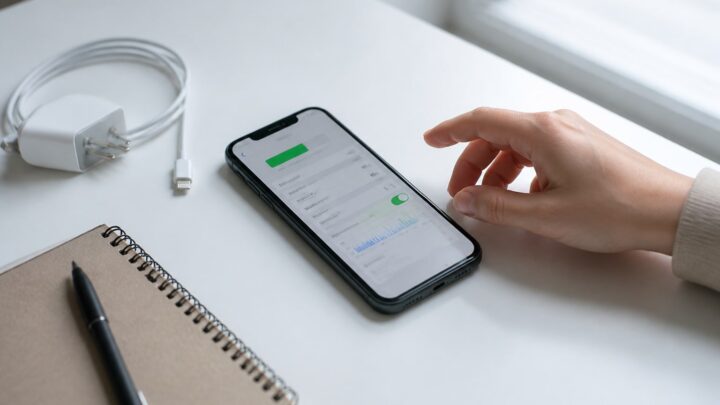
- Honest battery life. It lasts a full day with heavy use. If you want to stretch it further, you’ll want to know when to enable low-power mode and what it actually sacrifices — the logic is the same on Android.
Weak points: 23 W charging (slow for 2026), no optical telephoto, and the Tensor G4 gets hot in games. If you’re a serious gamer, look at something else.
Alternatives by profile
If you prioritise screen and multimedia: Samsung Galaxy A56. Larger panel, decent speakers and polished One UI 7. The camera trails the Pixel.
If you want a different design and a telephoto lens: Nothing Phone (3a) Pro. It’s the only one on the list with 3x optical zoom at this price. Nothing OS is clean and fast. Its software support (3 OS versions + 6 years of patches) is weaker than Google’s.
If you want the most for under €450: Xiaomi Redmi Note 14 Pro+. 200 MP sounds like marketing (it is), but the main sensor performs well in good light. HyperOS comes with bloatware; you can uninstall it, but it’s annoying.
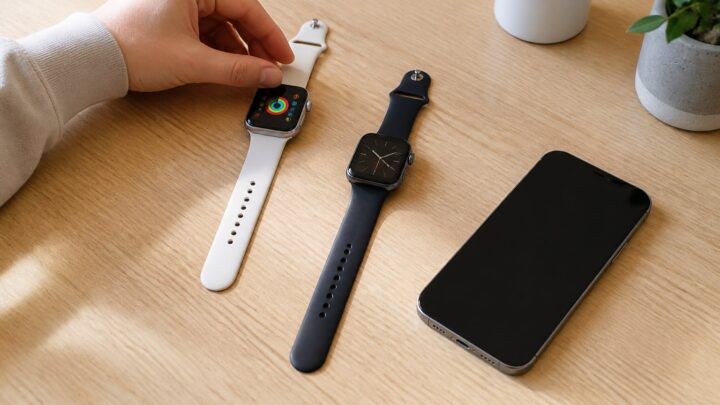
If you absolutely need an iPhone: iPhone 16e. A18 chip (brutal for the segment), iOS 18 with 5-6 years of support ahead, and Face ID. You pay €719 for a 60 Hz panel, a single rear lens and no MagSafe. If you already have an Apple Watch, AirPods and a Mac, the jump into the ecosystem justifies the bill. If not, don’t.
When NOT to buy now
The Pixel 10a is expected in March or April 2026 according to leaks (nothing confirmed by Google). If you’re in no rush and your current phone still does the job, waiting makes sense. The same goes for the Galaxy A57, which Samsung usually unveils in March.
The iPhone 16e has been on the market since February 2026. There’s no solid rumour of a successor before 2027, so buying it now won’t leave you behind any time soon.
Frequently asked questions
Is it worth paying €719 for the iPhone 16e instead of €499 for the Pixel 9a? Only if you’re already in the Apple ecosystem or are about to be. In raw performance the A18 crushes the Tensor G4, but in photography the Pixel matches or beats it, and the iPhone 16e’s 60 Hz screen in 2026 is hard to justify.
How much RAM do I need in a mid-range phone in 2026? 8 GB is the reasonable minimum. 12 GB makes a difference if you have many apps open or use on-device AI features, which are increasingly common on Android.
Do mid-range phones get enough updates? It depends on the brand. Google and Samsung offer 7 years on their 2026 models. Xiaomi sticks to 4 Android versions. Apple doesn’t publish an official figure, but given its track record the iPhone 16e should receive support until 2031 or 2032.
Can I record professional video with a mid-range phone? With caveats. The Pixel 9a records stabilised 4K at 60 fps, which is enough for social media. For serious work you need high-end (iPhone 16 Pro, Pixel 9 Pro or Galaxy S25 Ultra), mainly for audio and dynamic range.
What happens to the battery after two years of use? All the phones on this list use lithium batteries with similar degradation: between 80% and 85% of capacity after 500 cycles. If you notice it doesn’t last until midday ahead of time, check which apps consume power in the background, just as you would on an iPhone with the apps that drain the battery without you noticing.
As an Amazon Associate, I earn from qualifying purchases.