iPhone 16 Pro vs Google Pixel 9 Pro: which takes better photos in real-world conditions
Photo comparison between iPhone 16 Pro and Google Pixel 9 Pro with real-world tests in daylight, night, portrait, zoom and video. Verdict for each scenario, no nonsense.
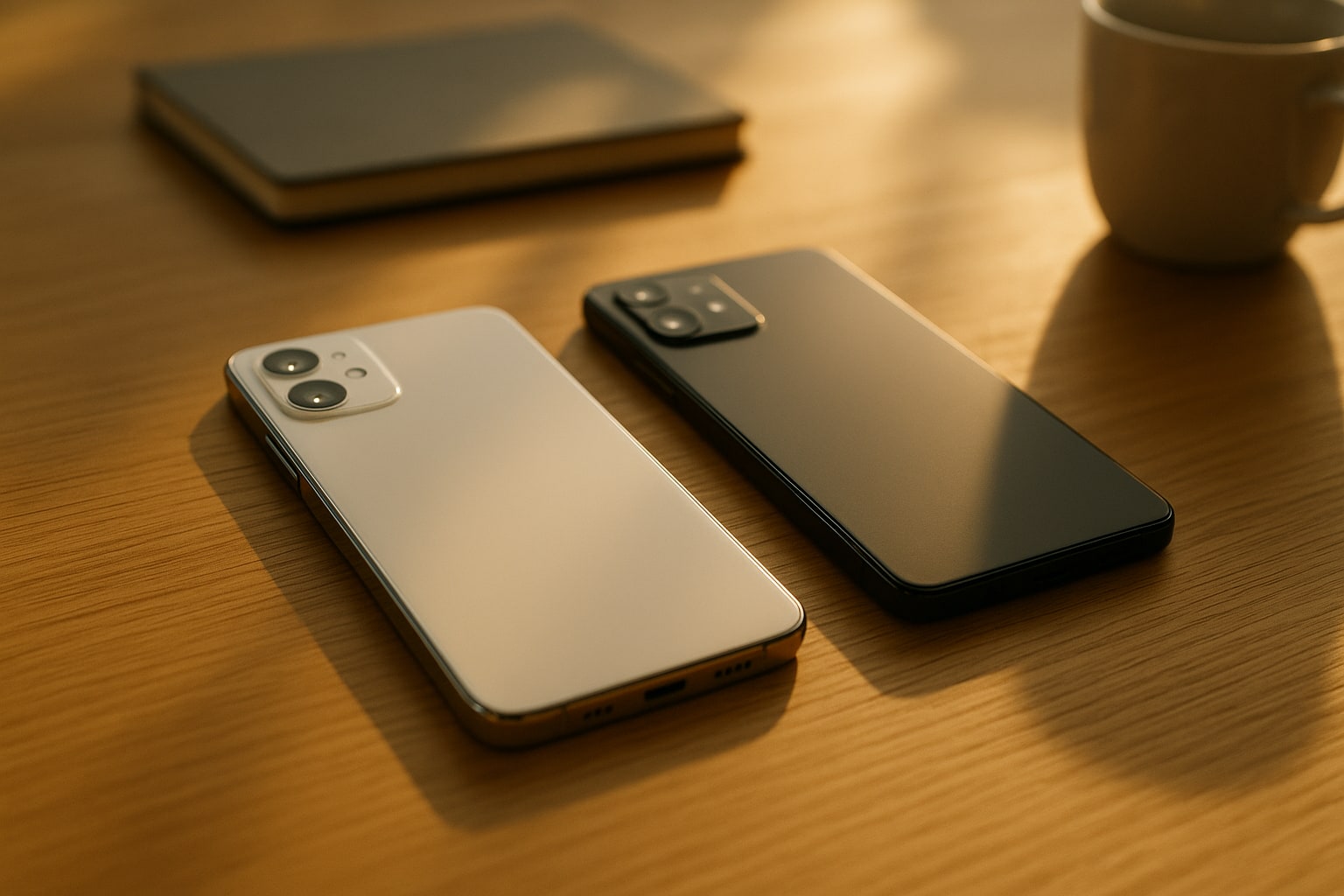
The question that lands in my inbox every week: if I’m going to spend between 1,200 and 1,500 euros on a phone for taking photos, should I stick with the iPhone 16 Pro or switch to the Google Pixel 9 Pro? Both are the flagship of their respective brands in 2026, both have been sold as “the best camera system we’ve ever made,” and both, in practice, take very good photos. But not the same photos.
I’ve had both phones side by side for several weeks, shooting the same things from the same spot at the same time. This article isn’t a lab analysis with DXO charts: it’s what happens when you pull the phone out of your pocket to photograph your daughter at the park, a plate in a poorly lit restaurant, or the Madrid skyline at eleven at night.
Sensors and hardware: what each one packs
The iPhone 16 Pro has a 48 MP main sensor (Fusion Camera) with an f/1.78 aperture, a 48 MP f/2.2 ultra-wide and a 12 MP f/2.8 telephoto with 5x optical zoom (the same tetraprism that debuted on the 15 Pro Max). The A18 Pro chip does the heavy lifting in the ISP.
The Google Pixel 9 Pro has a 50 MP f/1.68 main, a 48 MP f/1.7 ultra-wide (much brighter than Apple’s) and a 48 MP f/2.8 telephoto with 5x optical zoom. The SoC is the Tensor G4, and here I have to be honest: in raw power the A18 Pro crushes it, but Google doesn’t process photos in real time the way Apple does; it gives itself more leeway. That matters, and you’ll see it later.
On paper, the Pixel wins on ultra-wide brightness and telephoto megapixels. The iPhone wins on processing speed and consistency across the three cameras.
Processing philosophy: two ways of “seeing”
Before we get into tests, we need to understand where each result comes from. Apple, especially since iOS 17, has gone for an image that tries to resemble what your eyes see: warm highlights, moderate contrast, natural skin tones. With iOS 18 they added Photographic Styles v2, which are no longer a filter on top but a decision applied before the final render.
Google goes another way. The Pixel photo is always a little more “punchy”: more contrast, deeper shadows, bluer skies, more aggressive HDR. When it works, it’s spectacular. When it doesn’t, it sings out of tune.
Neither philosophy is objectively better. It depends on what you want to see when you open your gallery.
Daytime and good light: technical tie, different tastes
Outdoors in full sun, both phones shoot photos that hold up to printing up to A3. The difference is in the “character.”
The Pixel 9 Pro pulls out more detail in mid-level textures (tree leaves, rooftops) thanks to a more aggressive sharpening. Skies come out more saturated and shadows darker. It’s the photo Instagram likes without any editing.
The iPhone 16 Pro better preserves highlights (clouds, white facades) and handles skin tones more naturally. If there’s a person in the frame, Apple wins eight times out of ten. If it’s pure, hard landscape, Google wins.
Daytime verdict: technical tie. Pixel if you like photos that “grab you by the eyes” without editing; iPhone if you’re going to share portraits or photos of people.
Night and low light: here Google still rules
This is the test where the Pixel has been ahead for years, and it still is. On a street in Malasaña at 23:00, with yellow streetlights and little other light, the Pixel 9 Pro in automatic mode takes a cleaner photo, with less noise in the shadows and recoverable detail in the dark areas. The Pixel’s Night mode activates on its own, takes 2-3 seconds and produces a result that looks like it was made with more light than there actually was.
The iPhone 16 Pro also performs very well: its Night mode takes less time (1-2 seconds) and gives an image more faithful to the real ambience. Less “doctored,” more honest. But if the criterion is “which one pulls the most information out of nothing,” Google wins.
An important detail: the Pixel’s ultra-wide, with that f/1.7, shoots indoors in mediocre light in ways the iPhone’s ultra-wide can’t match. A real difference, not a lab one.
Night verdict: Pixel 9 Pro, no contest.
Portrait: iPhone wins on naturalness
Portrait mode with a person a metre and a half away, afternoon light. The iPhone 16 Pro nails the hair cutout (including loose strands), the simulated blur has believable gradual bokeh, and the skin tone comes out without the orange tint Google sometimes adds.
The Pixel 9 Pro has a very good cutout too, but the blur is more “digital”: the edges of the background look uniform, and it usually fails with glasses or earrings. It also tends to oversaturate the reds in the skin.
If you take portraits often, the iPhone has a clear advantage.
Portrait verdict: iPhone 16 Pro.
Zoom: the Pixel reaches further with a better result
Both do 5x optical zoom. Beyond that, it’s all processing.
Up to 10x they’re neck and neck. At 15x the iPhone starts showing the algorithm (“painted” textures, invented detail). The Pixel, thanks to the 48 MP telephoto and Super Res Zoom, holds up much better up to 20x-30x. At 30x the iPhone simply doesn’t hold up. At 30x the Pixel gives a photo usable for a screen, not for printing, but usable.
Zoom verdict: Pixel 9 Pro for long zoom. In the 5x-10x range, tie.
Video: the iPhone is still another league
There’s no debate here. The iPhone 16 Pro records in 4K Dolby Vision HDR at 60 fps, has ProRes, has Cinematic mode, and above all has stabilization and audio handling (with its four directional microphones) that no Android can match today. If you shoot video with your phone, even as a serious hobbyist, don’t even consider anything else.
The Pixel 9 Pro has improved a lot over previous generations. 4K video at 60 fps, HDR, “Video Boost” which processes in the cloud. But the result, compared on the same scene, is still inferior in detail, highlight handling and stabilization. And “Video Boost” takes hours to return the processed clip.
If you’re going to edit the videos afterwards, take advantage of the fact that you can shoot ProRes on the iPhone and edit in DaVinci Resolve on a MacBook Pro M3 without conversions.
Video verdict: iPhone 16 Pro, well ahead.
Each one’s star feature
Google has Magic Editor and Best Take: you move objects within the photo, change backgrounds, merge faces across several shots so everyone has their eyes open. It’s dark magic, it works surprisingly well and it’s integrated into Google Photos.
Apple fires back with Apple Intelligence and the Clean Up tool in Photos (the equivalent of Magic Eraser). It works well for removing passers-by or cables. But Google has been at this for years and it shows: the Pixel’s editor is more complete and less frustrating.
If editing afterwards on the phone itself matters to you, the Pixel wins.
Price and what you get
Official prices checked in August 2026:
| Model | 128 GB | 256 GB | 512 GB |
|---|---|---|---|
| iPhone 16 Pro | 1,219 € | 1,339 € | 1,589 € |
| Google Pixel 9 Pro | 1,099 € | 1,199 € | 1,329 € |
The Pixel is about 120 € cheaper in the base configuration. On the street, with Amazon or MediaMarkt deals, the Pixel is usually 100-150 € below Google Store’s official RRP; the iPhone barely moves from Apple’s price.
Verdict: for whom, and for whom not
Buy the iPhone 16 Pro if:
- You shoot video often (no contest there).
- You take a lot of portraits of people.
- You’re already in the Apple ecosystem (Mac, iPad, AirPods).
- You want consistency across the three cameras and “real” colors.
Buy the Google Pixel 9 Pro if:
- You shoot a lot at night or indoors in poor light.
- You often use long zoom (more than 10x).
- Editing within the phone matters to you.
- You want to pay less for very high photographic capabilities.
Both are excellent cameras. The difference isn’t in which one is “better” in the abstract, but in what photos you take.